If you’ve ever attended an Alcoholics Anonymous (AA) meeting or spoken with someone in recovery, you may have heard of sobriety chips. These small tokens may seem simple, but they hold a great deal of meaning for many people on the journey to sobriety.
🔑 Key takeaways
- AA sobriety chips (also called sobriety coins or medallions) are small tokens given at AA meetings to mark specific milestones in recovery.
- Each chip color represents a different length of sobriety — starting from 24 hours all the way through multiple years.
- The tradition dates back to the 1940s and is now practiced by AA groups worldwide, though it is not an official requirement of AA.
- The first chip — the white “desire” chip — is the most meaningful for many people. It represents the decision to begin the journey.
- Chips are used as physical reminders of progress and can be a powerful tool during moments of temptation or doubt.
- Chip colors can vary slightly between groups and regions — what matters most is what the chip represents to the individual holding it.
Sobriety chips are physical symbols of progress. They are given to people in recovery to mark the amount of time they have remained sober, often handed out during AA meetings in front of a supportive group. For many, these chips represent commitment, pride, and the strength it takes to keep going, even when it’s difficult.
A Brief History
The exact origin of AA chips isn’t clearly documented, but many believe the tradition began in the 1940s. The practice is not officially part of AA’s founding literature, such as The Big Book or the Twelve Steps and Twelve Traditions. However, it became widely adopted over time and is now a cherished custom in many AA groups around the world.
The idea was simple: create a small, tangible way for people to mark the time they’ve remained sober — and to inspire them to keep going. That idea continues today.
What Do the Chips Mean?
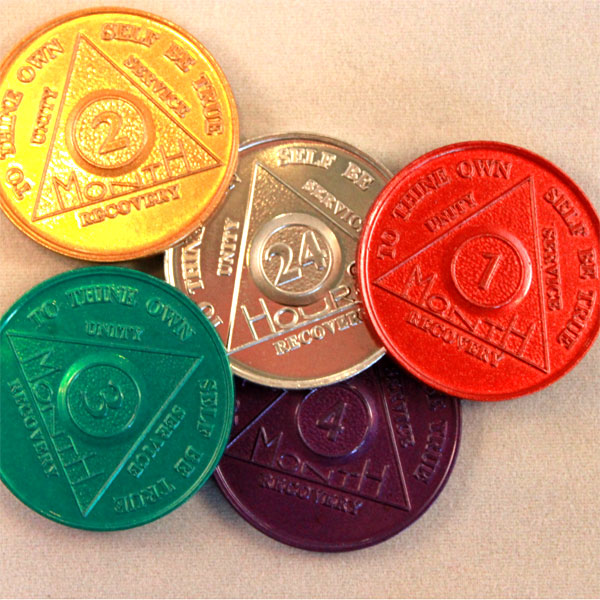
Sobriety chips come in different colors or materials to represent specific periods of sobriety. While the exact colors can vary from group to group, there are a few common standards:
- 24 Hours (White Chip) – Often called the “surrender” or “desire” chip, this is given when someone decides to stop drinking. It marks the beginning of their recovery.
- 30 Days (Red Chip) – One month sober. This chip acknowledges the difficult first few weeks.
- 60 Days (Gold or Yellow Chip) – Two months sober, showing continued progress.
- 90 Days (Green Chip) – A key milestone, representing three months free from alcohol.
- 6 Months (Blue Chip) – Half a year sober. A powerful reminder of change.
- 9 Months (Purple Chip) – A sign of commitment and resilience.
- 1 Year (Bronze or Gold Chip) – Often a more substantial or specially engraved chip, this marks a full year without alcohol. Many groups also recognize each year afterward with similar tokens.
These milestones may seem small to some, but to someone in recovery, they can mean everything. Each chip is a badge of honor, a visible reminder of growth, healing, and self-respect.
You might be interested in reading:
Why Are They Important?
Sobriety chips offer more than recognition. They give people something to hold onto, something they can physically touch during difficult moments. For many, that small chip can be a lifeline. When temptation arises, seeing or holding the chip can remind them of the progress they’ve made and what’s at stake.
The chips are also important because they are handed out publicly, usually during a group meeting. This public acknowledgment not only reinforces the person’s achievement, but it also inspires others who are earlier in their journey. When someone sees a peer receiving a 1-year chip, for example, it reminds them that lasting change is possible.
The full AA chip color order explained
While colors can vary slightly between AA groups and regions, the following is the most widely recognised chip progression used across the United States and internationally:
| Chip color | Milestone | What it represents |
|---|---|---|
| White | 24 hours / desire to stop | The “surrender” chip — the decision to begin recovery. The most important chip of all. |
| Red | 30 days | One month sober. Widely considered the hardest period — surviving the acute withdrawal phase. |
| Gold / yellow | 60 days | Two months — representing hope and optimism for a brighter, alcohol-free future. |
| Green | 90 days | Three months — a major turning point. Many treatment programs consider 90 days the foundation of early recovery. |
| Purple | 6 months | Half a year. Represents deepening commitment and growing resilience in recovery. |
| Dark blue | 9 months | Nine months — symbolising knowledge, clarity, and a higher level of self-awareness in sobriety. |
| Bronze / gold | 1 year | One full year — often a heavier, more substantial medallion. One of the most celebrated milestones in AA. |
| Multi-year | 2, 3, 5, 10+ years | Annual anniversary medallions, often engraved with the Serenity Prayer or the AA triangle. Colors and designs vary widely by group. |
Note: Some groups also hand out chips for 4 months (pink) and 5 months (pink or rose). Because AA groups operate independently, chip colors are not universally standardised — the milestone is what matters, not the exact color.
The history of AA sobriety chips
The exact origin of AA chips is debated, but most historians trace the tradition to two roots. The first is Sister Mary Ignatia, a nun at St. Thomas Hospital in Akron, Ohio, who in the 1930s and 1940s gave Sacred Heart medallions to patients being discharged from alcoholism treatment — asking them to return the medal before they took their next drink. This act of accountability planted the seed for what would become the chip tradition.
The second origin story points to Doherty S., who led an AA group in Indianapolis in 1942 and is often credited with introducing the formal “desire chip” concept — a token given to anyone who expressed a desire to stop drinking for the next 24 hours.
By the 1970s and 1980s, the color-coded chip system had become more standardised across AA groups in North America, and the tradition has since spread globally. Today, similar token systems are used in Narcotics Anonymous (NA), Al-Anon, and many other 12-step programs.
Do you have to use AA chips?
No. AA chips are entirely optional. Alcoholics Anonymous as an organisation does not mandate the use of chips — there is no mention of them in the Big Book or the Twelve Steps and Twelve Traditions. Individual groups decide whether to use them, and no member is required to participate in chip ceremonies.
Some people find them deeply meaningful; others prefer a more private approach to marking their milestones. Both are completely valid. What matters in recovery is not the token itself, but the commitment it represents.
What happens if you relapse?
If someone relapses, they are not punished or shamed. AA’s philosophy is one of compassion and continued support. A person can return to a meeting, pick up a new white desire chip, and start their sobriety count again. There is no judgment — relapse is recognised as a common part of many people’s recovery journey, not a failure that ends it.
Many long-term AA members who have achieved years of sobriety will tell you they went back to the white chip more than once before finding lasting recovery. The chip is a fresh start, not a verdict.
Where can you get AA sobriety chips?
Chips are typically distributed at AA meetings free of charge. However, they can also be purchased from:
- Online retailers — Amazon, Etsy, and dedicated recovery supply shops carry a wide range of chip styles, materials, and designs
- Local AA and NA service offices — most regional AA offices sell chips at low cost
- Recovery centers and treatment facilities — many stock chips to give to clients
- Specialty gift shops — some carry engraved or custom medallions for milestone anniversaries
Most chips are made from aluminum or plastic and cost just a few dollars. Higher-end anniversary medallions made from bronze or with crystal inlays are also available for significant milestones like 1-year, 5-year, and 10-year anniversaries.
AA chips vs. NA key tags
While AA uses chips (round coin-style tokens), Narcotics Anonymous (NA) traditionally uses key tags — small, flat plastic tags that attach to a keychain. The milestones and purpose are the same, but the format differs. Both systems serve the same goal: giving people in recovery something tangible to carry with them as a reminder of their commitment.
Some people in recovery carry both — or mix chips from different programs — to honour all aspects of their sobriety journey.
A Personal Symbol of Strength
Recovery from alcohol addiction is deeply personal. No two journeys are the same, and each person faces their own challenges. Sobriety chips help make that journey visible, even if just in a small, quiet way. They represent accountability, effort, and progress.
Many people who have received these chips keep them in their pocket, on a keychain, or in a safe place at home. Over time, they may collect several, each one tied to a moment of personal victory.
Sobriety chips may be small, but their impact can be enormous.
They are more than just tokens; they are symbols of strength, perseverance, and hope. While not everyone in recovery chooses to use chips, for those who do, they often serve as powerful reminders of the choice they made to live a life free from alcohol and the courage it takes to keep making that choice every day.
If you or someone you know is starting the journey to sobriety, remember that progress is worth celebrating. Whether it’s one day or one year, every moment sober is a step in the right direction.
Frequently asked questions about AA sobriety chips
What is the first AA chip you receive?
The first chip you receive in AA is the white chip, also known as the “desire chip” or “surrender chip.” It is given to anyone who expresses a desire to stop drinking — even if it’s just for the next 24 hours. You don’t need to have been sober for any amount of time to receive it. It simply marks the decision to begin. Many people in long-term recovery say the white chip is the most meaningful one they ever received.
What color is the 1-year AA chip?
The 1-year AA chip is typically bronze or gold in color, and it is often heavier and more substantial than the earlier aluminum chips. Many groups present a specially engraved medallion for the one-year milestone, sometimes featuring the Serenity Prayer or the AA triangle symbol. It is one of the most celebrated moments in an AA member’s recovery journey. The exact design can vary between groups and suppliers.
Are AA chips mandatory?
No, AA chips are not mandatory. They are not mentioned in AA’s founding literature — the Big Book or the Twelve Steps and Twelve Traditions. Individual AA groups decide whether to use them, and members are never required to participate in chip ceremonies. Some people find chips deeply meaningful, while others prefer to mark their sobriety privately. Both approaches are equally valid within AA’s philosophy of personal choice.
What happens to your AA chip if you relapse?
Nothing is “taken away” if you relapse. AA does not punish or shame members for relapsing — it is recognised as a common part of many people’s recovery journey. If someone relapses and returns to a meeting, they are welcomed back and can pick up a new white desire chip to start their sobriety count again. Many people who have achieved long-term sobriety went back to the white chip multiple times before finding lasting recovery. The chip represents a fresh start, not a judgment.
What does the 90-day chip mean in AA?
The 90-day chip (typically green) marks three months of continuous sobriety. This is considered a significant turning point in recovery — many addiction specialists and treatment programs consider the 90-day mark as the end of the acute phase of recovery, where the risk of relapse is highest. Receiving the 90-day chip is often an emotional milestone for AA members, representing not just time sober but a genuine shift in lifestyle, habits, and mindset.
Can you buy AA chips for someone?
Yes, absolutely. AA chips can be purchased by anyone — you do not need to be a member of AA or any recovery program to buy them. They make thoughtful, meaningful gifts for a loved one celebrating a sobriety milestone. You can find them on Amazon, Etsy, dedicated recovery supply shops online, and at local AA service offices. Engraved or custom medallions for significant anniversaries like 1 year or 5 years are also widely available.
Do AA chips have any monetary value?
No, AA chips have no monetary value in themselves. Most are made from aluminum or plastic and can be purchased for just a few dollars. Their value is entirely symbolic — they represent the time, effort, and courage it took to stay sober. For many people in recovery, a chip that cost $2 is one of the most prized possessions they own, because of what it represents rather than what it is made of.
How is an AA chip different from an NA key tag?
AA chips are round, coin-style tokens typically made from aluminum or plastic, similar in size to a poker chip. Narcotics Anonymous (NA) uses “key tags” — smaller, flat plastic tags designed to attach to a keychain. Both serve the same purpose: marking sobriety milestones and giving members something physical to carry as a reminder of their commitment. The milestones and meanings are essentially the same across both systems. Some people in dual-recovery carry tokens from both programs.