For millions of people who grew up in the early 2000s, Bam Margera was impossible to ignore.
He was the skateboarder who seemed to have unlimited energy, the guy who could turn an ordinary day into complete chaos, and one of the faces of a generation that grew up watching Jackass.
At the height of his fame, Bam appeared to be living a life that many people could only dream about. He had the successful skateboarding career, the television shows, the money, the worldwide fan base, and the freedom to do almost anything he wanted.
His life looked like a permanent adventure.
But years later, many fans would look back and ask a very different question:
What happened to Bam Margera?
The answer is not a simple story about fame going wrong. It is a much more complicated story about success, loss, addiction, and the difficult process of trying to rebuild yourself when your life has become something completely different from what it once was.
Before Jackass, There Was Skateboarding

Long before millions of people knew his name, Brandon Cole Margera was a skateboarder from West Chester, Pennsylvania who wanted to do things differently.
Skateboarding was not just a hobby for Bam. It was the place where he found his personality and his creative style. While many skateboard videos focused purely on tricks, Bam and his friends added something else: humor, personality, and a feeling that viewers were hanging out with them rather than watching a professional production.
That approach eventually became the CKY video series.
The videos were rough around the edges, but that was exactly what made them stand out. They mixed skateboarding with pranks, comedy, and the kind of unpredictable moments that would later become a defining part of Jackass.
The timing could not have been better.
When Jackass premiered on MTV in 2000, it introduced audiences to a completely different type of entertainment. The show was built around a group of friends willing to do ridiculous stunts, often painful ones, simply because they could.
It was not polished.
It was not traditional.
And people loved it.
Bam quickly became one of the most recognizable personalities from the show. He wasn’t just willing to take a hit for entertainment. He had a natural ability to create moments that people remembered.
He understood that the funniest part was often not the stunt itself, but the reaction afterward.
The Rise of Viva La Bam
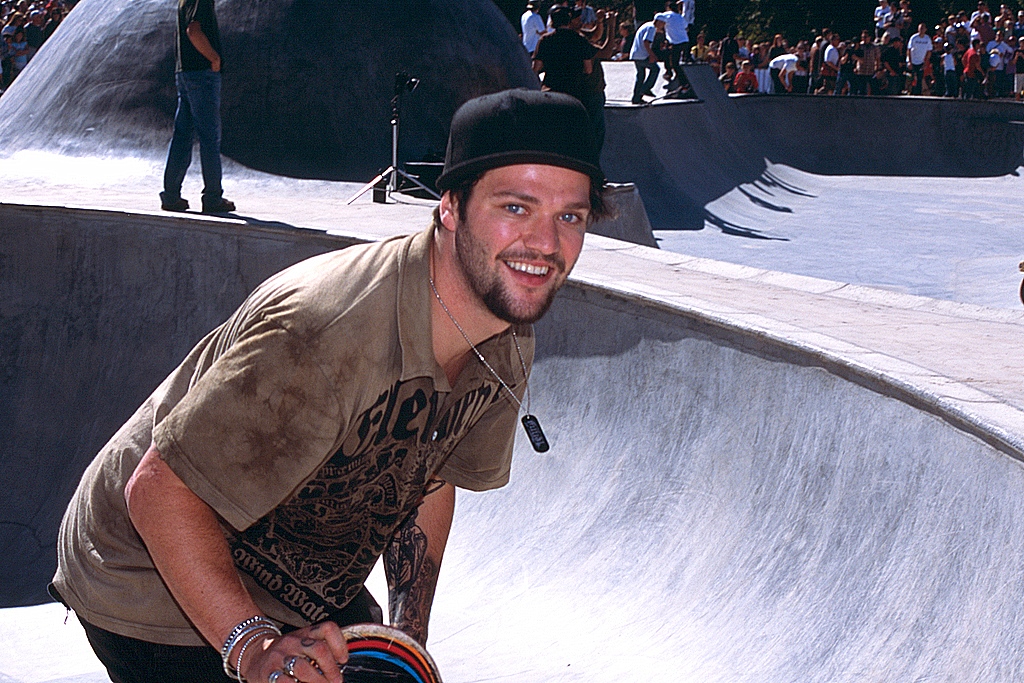
Bam’s popularity grew so quickly that MTV gave him his own series, Viva La Bam, in 2003.
The show brought viewers into his personal world. His parents, Phil and April, became famous alongside him as Bam created increasingly ridiculous situations around their home.
For fans, it felt like watching a friend’s family life turned into a television show.
The pranks were extreme, but there was also something surprisingly relatable about it. Underneath the chaos was a family dynamic that many viewers recognized. April’s frustration, Phil’s reactions, and Bam’s endless need to push boundaries became part of the appeal.
At the time, it was easy to understand why people connected with him.
- Bam represented freedom.
- He represented doing things differently.
- He represented the idea that life did not have to follow the normal path.
For many young fans, he was proof that creativity and personality could turn into something much bigger.
The Hidden Cost of Always Being “Bam”
The public version of Bam Margera was someone who was always switched on.
There was always another stunt.
- Another trip.
- Another party.
- Another story.
And when someone becomes famous because of that personality, it can become difficult to step away from it.
The world expects you to keep being the person they discovered.
For Bam, the image was built around being fearless and unpredictable. The same qualities that made him entertaining were also qualities that could make slowing down much harder.
This is something many people struggling with alcohol can relate to, even without fame.
Sometimes drinking begins as something connected to fun, friendships, celebrations, or stress relief. Over time, the relationship with alcohol can change without a person realizing it.
The thing that once felt like a choice can slowly start feeling like a requirement.
For Bam, that shift became more visible as the years went on.
When the Story Started Changing
The early years of Bam Margera’s career were filled with success, but the years that followed became far more complicated.
The same public attention that once celebrated his wild lifestyle began focusing on his personal struggles.
Fans who once searched for the latest stunt or episode began searching for updates about his wellbeing.
That change is one of the hardest parts of addiction stories involving public figures.
The person people once saw as entertaining becomes someone they worry about.
Behind every headline is still a person.
And in Bam’s case, that person was dealing with challenges that were becoming increasingly difficult to hide.
When the Laughs Became Harder to Find

For years, Bam Margera’s public image was built around chaos.
That was the entire point.
The bigger the stunt, the better the story. The more outrageous the idea, the more people wanted to watch. The same personality that made him famous was the reason millions of fans connected with him.
But there is a difference between choosing chaos for entertainment and feeling unable to escape it.
As the years passed, Bam’s life became more complicated. The jokes and stunts that once defined his career started being mixed with stories about personal struggles, relationships falling apart, and concerns from people close to him.
This is one of the hardest things about watching someone struggle with addiction from the outside.
The person you remember does not disappear overnight.
The funny moments still happened.
The memories are still real.
The talent is still there.
But addiction can slowly take up more and more space until it starts affecting everything around it.
For many fans who grew up watching Bam, it was confusing to see someone who seemed so unstoppable suddenly appear so vulnerable.
Losing Ryan Dunn

In 2011, Bam experienced a loss that changed everything.
Ryan Dunn, one of his closest friends and one of the most recognizable members of the Jackass crew, died in a car crash.
For viewers, Dunn was the guy from the show who always seemed ready for the next ridiculous idea.
For Bam, he was much more than that.
They had spent years together before fame. They created videos together. They built careers together. Their friendship was part of the foundation that made the CKY and Jackass worlds feel authentic.
Losing someone close can leave a mark that people carry for years.
Grief does not always look the way people expect. Sometimes it appears as sadness. Sometimes anger. Sometimes a desire to escape uncomfortable emotions entirely.
And for someone already dealing with alcohol, a major loss can make everything harder.
In interviews over the years, Bam has spoken about the impact Ryan’s death had on him. The years after that loss became increasingly difficult, and his struggles became more visible to the public.
The conversation around Bam changed.
People were no longer just asking about the next stunt.
They were asking if he was okay.
The Reality of Addiction: It Is Rarely One Bad Decisionr
When people hear about addiction, they often look for a single moment where everything went wrong.
- A mistake.
- A bad choice.
- A turning point.
But real life is usually much messier.
Addiction often develops slowly. A person may still work. They may still laugh with friends. They may still have moments where everything seems completely normal.
That is why many people hide their struggles for so long.
They compare themselves to a stereotype and think:
“I can’t have a problem because my life still looks okay.”
This is something that makes Bam’s story important. His struggles happened while he was still someone millions of people recognized. He was successful, talented, and surrounded by people.
And yet he still struggled.
That is the uncomfortable truth about addiction.
It does not care how successful someone is.
It does not care how funny someone is.
It does not care how many people are cheering for you.
Rehab, Relapse, and Trying Again
Over the years, Bam entered treatment programs multiple times as he tried to regain control of his life.
Many people misunderstand this part of recovery.
They see someone go to rehab and expect the story to be finished.
- A person goes away.
- They get help.
- They come back.
- Everything is fixed.
But that is not how recovery works for many people.
For some, the path is messy.
There can be progress followed by setbacks. There can be moments where someone seems completely determined, followed by moments where they struggle again.
Relapse can happen.
It does not mean recovery was fake.
It does not mean someone failed.
It means there are still things that need attention.
That does not remove accountability, but it does help explain why addiction is such a difficult battle.
The goal is not perfection.
The goal is progress.
The People Who Tried to Help
One of the more interesting parts of Bam’s story is that many people around him understood addiction personally.
Steve-O, another Jackass star, has been open about his own addiction and recovery journey.
Unlike many people who watched Bam’s struggles from a distance, Steve-O understood what it meant to fight your own battles while everyone else had an opinion.
Over the years, members of the Jackass group expressed concern for Bam and tried to support him.
Those situations were not simple.
When someone you love is struggling, there is a difficult balance between helping and protecting yourself.
You want to save them.
But you cannot do the work for them.
You can offer support.
You can encourage change.
You can show someone they matter.
But ultimately, recovery has to become their choice.
Why Bam Was Not in Jackass Forever
When Jackass Forever was announced, many fans immediately noticed Bam’s absence.
After all, he had been one of the original personalities who helped make the franchise what it was.
The reason was not simply about entertainment.
There were serious concerns involving Bam’s health and sobriety.
Reports at the time described disagreements around conditions related to his participation and concerns from the production team about his wellbeing.
It became a difficult situation for everyone involved.
Fans often wanted a simple answer.
- Who was right?
- Who was wrong?
But addiction situations are rarely that clean.
There were people who cared about Bam and wanted him involved.
There were also people who had to consider safety, boundaries, and the future of the production.
Both things can exist at the same time.
Someone can be struggling and still be loved.
Someone can need help and still need boundaries.
What We Can Learn From Bam Margera’s Story
Bam Margera’s story is still being written.
That might be the most important thing to remember.
When someone struggles publicly, it is easy for the hardest moments to become the moments people remember the most. The headlines, the arguments, the setbacks, and the difficult years can start to define a person.
But addiction does not erase everything that came before it.
- It does not erase the talent.
- It does not erase the friendships.
- It does not erase the moments that made millions of people laugh.
Before Bam became a story people debated online, he was a skateboarder who inspired an entire generation. He was someone who turned creativity into a career and showed people that being different could become a strength.
And today, many fans are not hoping to see the old Bam return.
They are hoping to see something even better.
A healthy Bam.
A happy Bam.
A Bam who no longer has to live under the weight of expectations, fame, or the need to constantly prove something.
That is what recovery is really about.
It is not about becoming the person you were before everything went wrong.
It is about building a life that feels worth protecting.
Supporting Someone Through Addiction
One of the biggest lessons from Bam’s journey is that addiction affects more than just the person drinking.
- It affects families.
- Friendships.
- Relationships.
People who care often feel helpless because they want to fix the situation, but addiction is not something another person can simply solve.
The most powerful thing loved ones can offer is support, honesty, and encouragement.
- Not judgment.
- Not shame.
- Not giving up.
Many people who eventually recover have a moment where they realize someone still believes they are worth saving.
Sometimes that is the beginning of change.
A Message To Anyone Struggling With Alcohol
If you see parts of your own story in Bam’s journey, remember this:
You do not have to wait until everything falls apart before asking for help.
You do not have to hit some imaginary “rock bottom.”
You do not have to prove that your problem is bad enough.
If alcohol is taking more from your life than it is giving back, that is already enough reason to take a closer look.
Recovery does not require a perfect past.
It only requires a willingness to start.
Final Thoughts
Millions of people first discovered Bam Margera because of skateboarding, stunts, and the unforgettable chaos of Jackass.
But perhaps the most meaningful chapter of his story is not the one where he was famous.
It is the one where he is simply trying to find his way forward.
Bam’s journey deserves more than judgment from the sidelines.
- It deserves compassion.
- It deserves patience.
And above all, it deserves the same thing every person fighting addiction deserves:
The chance to keep trying.