If alcoholism has affected someone in your family, it is understandable to wonder whether you could develop the same problem. Perhaps you grew up watching a parent struggle with alcohol. Perhaps several relatives have experienced addiction, and you have started noticing changes in your own drinking.
It is a question worth taking seriously, but the answer is not as frightening as you might think.
Yes, genetics play an important role in alcoholism, but having a family history does not mean you are destined to develop it. There is no single alcoholism gene, and inherited risk is only part of a much bigger picture. Your surroundings, experiences, mental health and relationship with alcohol also matter.
Scientists have made considerable progress in understanding how genes influence alcohol use. Some inherited variations affect how the body processes alcohol, while others influence the way the brain responds to it. Understanding these differences can help explain why some people are more vulnerable than others.
Most importantly, knowing that you may have an increased risk gives you an opportunity to make informed decisions about alcohol. It does not determine how your life will turn out.
To understand the condition itself, including its symptoms, causes and treatment options, read our guide to what alcohol use disorder actually means.
Is Alcoholism Genetic?
Yes. Research shows that genetic differences contribute substantially to a person’s vulnerability to Alcohol Use Disorder (AUD), the medical term for what is commonly called alcoholism.
The National Institute on Alcohol Abuse and Alcoholism (NIAAA) estimates that approximately 50% to 60% of the variation in vulnerability to AUD is inherited. However, this figure needs some explanation. It does not mean that someone with an alcoholic parent has a 50% to 60% chance of developing the condition.
It means that genetic differences help explain why some people in a population are more vulnerable to AUD than others.
Many genes are involved, and most have relatively small individual effects. These genes can influence how the body responds to alcohol, how rewarding drinking feels, how the brain handles stress and other characteristics associated with addiction risk.
The environment matters too. Growing up around heavy drinking, experiencing trauma, struggling with mental health problems or being regularly exposed to situations where heavy drinking is normal can all contribute to risk.
This is why two people from the same family can have very different experiences with alcohol. They may share some genetic vulnerabilities, but their lives, circumstances and responses to alcohol will not necessarily be the same.
How Much of Alcoholism Is Hereditary?
The often-quoted figure of 50% to 60% comes from research into the heritability of Alcohol Use Disorder.
This estimate is based on population-level research. It does not mean that someone with a family history has a 50–60% chance of developing alcohol use disorder. The National Institute on Alcohol Abuse and Alcoholism (NIAAA) explains the role of genetics in alcohol use disorder.
Heritability is a scientific measure describing how much of the variation in a particular characteristic within a population is associated with genetic differences. It is useful for understanding the contribution of genetics, but it is frequently misunderstood.
For example, if researchers estimate that AUD has a heritability of around 50%, this does not mean that half of someone’s alcoholism is genetic and the other half is environmental. Nor does it predict whether a particular person will develop an alcohol problem.
It is a population-level estimate, not a personal risk calculation.
Family studies provide another perspective. According to MedlinePlus Genetics, children of people with Alcohol Use Disorder are approximately two to six times more likely to develop alcohol problems than the general population.
That increased likelihood reflects more than inherited biology alone. Children also grow up in environments shaped by their parents’ behaviour, family circumstances and attitudes towards alcohol.
A child who regularly sees heavy drinking treated as an ordinary part of family life may grow up with a different understanding of alcohol than someone who rarely encounters it.
The important distinction is that increased risk is not certainty. Many people with a strong family history never develop Alcohol Use Disorder, while others experience serious problems despite having no known family history.
Which Genes Are Linked to Alcoholism?
There is no single gene responsible for alcoholism. Researchers have identified many genetic variations associated with alcohol use and the risk of developing AUD.
Some of the best-understood examples involve the way the body breaks down alcohol. Others are connected to the brain’s communication systems and its response to rewarding experiences.
Research has identified several genes involved in alcohol metabolism and the brain’s response to alcohol. MedlinePlus Genetics provides an overview of the genetic factors associated with alcohol use disorder.
ADH Genes and Alcohol Metabolism
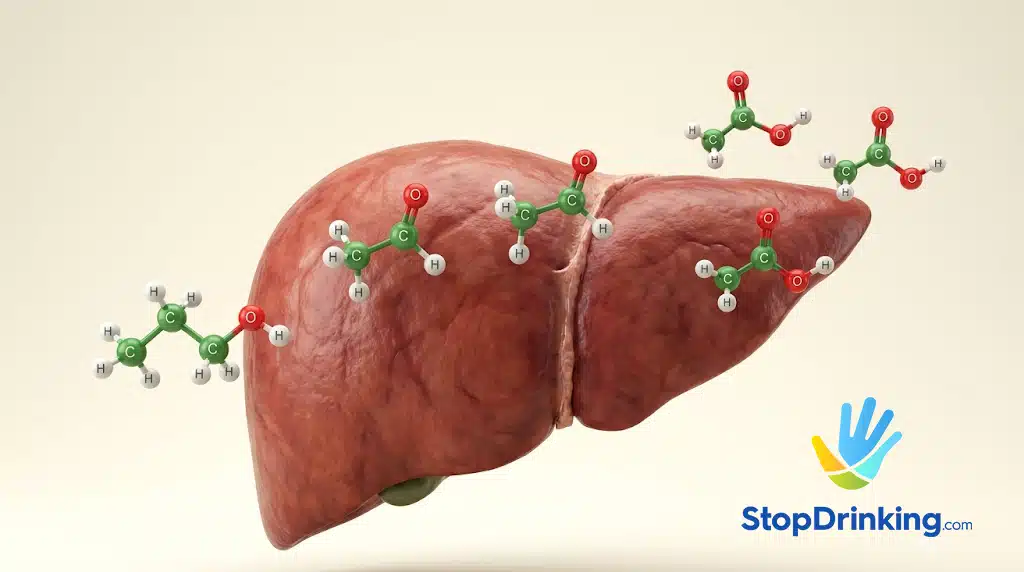
When you drink alcohol, your body begins breaking it down, primarily in the liver.
A group of genes known as the alcohol dehydrogenase genes, or ADH genes, provide instructions for producing enzymes involved in this process.
These enzymes help convert ethanol, the type of alcohol found in drinks, into acetaldehyde.
The speed at which this happens can vary between people because of inherited genetic differences. Some variations influence how quickly alcohol is processed, which can affect how a person experiences drinking.
One particularly studied variation involves the ADH1B gene. Certain versions of this gene are associated with faster alcohol metabolism and a reduced risk of developing Alcohol Use Disorder.
The ALDH2 Gene
Another important gene is ALDH2.
After alcohol is converted into acetaldehyde, the body needs to break that substance down further. Acetaldehyde is toxic and contributes to several unpleasant effects associated with drinking.
The ALDH2 gene helps produce an enzyme responsible for converting acetaldehyde into acetate, which the body can process further.
Some inherited variations reduce the activity of this enzyme. When this happens, acetaldehyde can build up after drinking.
People with certain ALDH2 variations may experience facial flushing, nausea, headaches and a rapid heartbeat after consuming alcohol.
These reactions can make drinking particularly unpleasant and are associated with a lower likelihood of developing AUD. However, they are not a guarantee against alcohol-related harm. Acetaldehyde exposure can also increase the risk of certain cancers, making it particularly important that people with these variations do not regard their reaction as harmless.
Genes That Influence the Brain
Not all genetic influences on alcoholism involve the liver or alcohol metabolism.
Other genes are involved in the nervous system, where chemical messengers called neurotransmitters allow brain cells to communicate.
These systems help regulate mood, motivation, reward, stress and behaviour.
Researchers have studied genetic variations affecting several neurotransmitter pathways, including those involving dopamine and GABA. These chemicals are involved in how the brain responds to rewarding experiences and regulates activity.
Alcohol affects several of these systems. In some people, inherited differences may influence how stimulating, relaxing or rewarding drinking feels.
However, it would be misleading to suggest that one dopamine or GABA gene causes alcoholism. The biology is much more complicated, and researchers are still working to understand how individual genetic variations contribute to risk.
How Genetics Affect the Way You Respond to Alcohol
Have you ever wondered why some people seem to become intoxicated very quickly while others can drink considerably more without appearing particularly affected?
Part of the explanation may involve genetics.
People differ in their natural sensitivity to alcohol. Some experience strong sedating effects after relatively small amounts, while others experience more stimulating effects or feel less affected by the same quantity.
An inherited low response to alcohol can be a particular concern.
Someone who naturally needs more alcohol to feel its effects may drink larger amounts, sometimes without recognising how much they have consumed. This can contribute to heavier drinking and an increased risk of developing AUD.
It is also important to distinguish between natural sensitivity and tolerance that develops over time.
If someone regularly drinks heavily, the body can become accustomed to alcohol. They may need increasingly large amounts to experience the same effects they previously felt from smaller quantities.
This acquired tolerance is not a sign that someone handles alcohol particularly well. In fact, being able to drink large amounts without feeling very intoxicated can be a warning sign.
The NIAAA identifies a low response to alcohol and the experience of more stimulating rather than sedating effects as factors associated with increased vulnerability to alcohol problems.
Does Alcoholism Run in Families?

Yes, alcohol problems can run in families, and there is good scientific evidence that family history is an important risk factor.
But there is a difference between inheriting a genetic vulnerability and growing up in an environment where problematic drinking is common.
Imagine someone whose parent regularly drinks heavily. That person may inherit some of the same genetic characteristics that influence how their body and brain respond to alcohol.
At the same time, they may grow up seeing alcohol used to celebrate, manage stress, deal with difficult emotions or cope with everyday problems.
These experiences can shape their own relationship with drinking long before they realise it.
This does not mean every child of a parent with alcoholism will develop the same problem. Many do not. Some choose to avoid alcohol altogether, while others drink without developing AUD.
It is also possible for alcohol problems to appear in a family even when there is no clear history of addiction in previous generations. Someone can develop Alcohol Use Disorder without knowing of any relatives who experienced it.
Family history is therefore useful information, but it cannot tell the whole story.
If someone close to you is struggling with alcohol, our guide on how to help a loved one stop drinking explains how you can support them.
Family history can increase someone’s risk, but genetics are only part of the explanation. The NIAAA explains how genes, mental health, trauma and environmental factors influence vulnerability to alcohol-related harm.
Can You Develop Alcoholism Without a Family History?
Absolutely.
Not everyone who develops Alcohol Use Disorder has a parent, sibling or other relative with a drinking problem.
Genetics are only one part of the picture. Drinking patterns, mental health, stress, trauma, social circumstances and access to alcohol can all influence whether someone develops problems.
For example, someone may begin drinking occasionally without experiencing any particular difficulty. Over time, however, drinking might become a way of dealing with anxiety, loneliness, relationship problems or work-related stress.
As drinking becomes more frequent, it can gradually take on a larger role in everyday life.
This can happen regardless of whether addiction has affected other members of the family.
It is also worth remembering that having no family history does not make someone immune to alcohol-related harm. Anyone who drinks can experience health consequences, and some people develop AUD without any obvious inherited vulnerability.
How Environment and Life Experiences Influence Genetic Risk
Genes do not operate in isolation. The experiences people have throughout their lives can influence their relationship with alcohol and the likelihood of developing problems.
Researchers sometimes describe this as an interaction between genetic and environmental factors.
In simple terms, a person’s inherited characteristics may make certain experiences more influential, while their surroundings can affect how those vulnerabilities develop.
Several factors are particularly relevant.
The relationship between stress, trauma and alcohol problems is well documented. The NIAAA explains how stress and other risk factors can influence vulnerability to alcohol use disorder.
Childhood Experiences and Family Environment
Growing up in a household where heavy drinking is common can influence how a person views alcohol.
Children may come to see drinking as an ordinary response to stress, sadness or celebration. They may also experience instability, conflict or emotional difficulties associated with a parent’s drinking.
These experiences do not automatically lead to addiction, but they can contribute to later vulnerability.
Stress and Trauma
Long-term stress and traumatic experiences can affect mental health and the way people cope with difficult emotions.
For some, alcohol becomes a way to temporarily escape unwanted thoughts or feelings. Unfortunately, the relief is short-lived, and drinking can eventually create additional problems.
The NIAAA identifies trauma, particularly during childhood, and significant life stress as important factors associated with AUD vulnerability.
Mental Health
Depression, anxiety and other mental health difficulties can occur alongside problematic alcohol use.
Some people begin drinking in an attempt to manage symptoms, while others experience worsening mental health as alcohol use increases.
The relationship can work in both directions, making it important to address mental health and drinking problems together when treatment is needed.
Drinking Patterns and Social Influences
The age at which someone starts drinking, how often they drink and the amount they consume can also influence risk.
Social surroundings matter too. Regularly spending time in environments where heavy drinking is encouraged can make excessive alcohol use seem normal.
None of these factors alone determines whether someone will develop AUD. They are part of a much wider combination of influences.
Stressful experiences and difficult emotions can sometimes make alcohol more appealing as a way to cope. If this sounds familiar, our guide to understanding and dealing with alcohol cravings explains why cravings happen and what can help.
Can You Prevent Alcoholism If It Runs in Your Family?
Having a family history of alcoholism does not mean you need to spend your life worrying about becoming addicted.
It does, however, give you a reason to pay attention to your relationship with alcohol.
Knowing that addiction has affected close relatives can help you make more informed decisions. For some people, avoiding alcohol altogether is a sensible choice, particularly if they have noticed that drinking is becoming difficult to control.
For others, the first step may be recognising situations where they are more likely to drink heavily, such as periods of stress, loneliness or emotional difficulty.
A few things worth considering include:
- Understand your family history. Knowing that alcohol problems have affected close relatives can help you recognise a possible vulnerability.
- Pay attention to your drinking patterns. Notice whether you are drinking more frequently, consuming larger amounts or finding it difficult to stick to decisions about drinking.
- Find healthier ways to manage stress. Exercise, supportive relationships, counselling and other coping strategies can help when life becomes difficult.
- Take mental health seriously. If anxiety, depression or trauma are affecting your life, seek appropriate support rather than relying on alcohol to manage the symptoms.
- Ask for help early. You do not need to wait until drinking has seriously affected your health, relationships or work before speaking to a professional.
There is no need to wait for a crisis before taking your concerns seriously.
If you already feel that alcohol is becoming difficult to control, getting help is a positive step, not an admission of failure.
If you’re already concerned about your own drinking, you don’t have to wait until things get worse to make a change. Our guide on how to help yourself stop drinking offers practical steps to get started.
Can Genetic Testing Tell You If You Will Become an Alcoholic?
At present, no routine genetic test can reliably tell someone whether they will develop Alcohol Use Disorder.
Researchers can identify genetic variations associated with increased or decreased risk, and advances in genetic research are helping scientists understand the condition in much greater detail.
Some studies have also explored polygenic risk scores. These combine information from many genetic variations to estimate a person’s inherited susceptibility to a particular condition.
However, these scores are not reliable enough to predict an individual’s future development of AUD in routine clinical practice.
A genetic test cannot account for everything that will happen throughout someone’s life. It cannot accurately predict future drinking habits, relationships, mental health, stress or other environmental influences.
For now, family history and a person’s actual relationship with alcohol are much more useful considerations than trying to obtain a genetic prediction.
Frequently Asked Questions About Alcoholism and Genetics
Is alcoholism inherited from your mother or father?
Genetic influences can come from both parents. There is no simple rule that alcoholism is inherited from the mother or father specifically. A person’s inherited vulnerability reflects many genetic variations, alongside environmental and lifestyle influences.
If both parents have alcoholism, am I more likely to develop it?
Having two parents with Alcohol Use Disorder may increase your risk, as you may share genetic vulnerabilities and have grown up in an environment affected by problematic drinking. However, it does not mean you will necessarily develop the condition.
Can alcoholism skip a generation?
It can appear to skip generations. Alcohol Use Disorder does not follow a simple inheritance pattern in which a particular gene is passed directly from parent to child. Someone may inherit certain vulnerabilities without developing the condition, while another family member may experience significant problems.
Does having a high alcohol tolerance mean I am genetically predisposed to alcoholism?
Not necessarily. Some people naturally have a lower response to alcohol, which can be influenced by genetics and is associated with increased risk. However, tolerance can also develop through repeated drinking. Needing more alcohol to feel its effects is not a sign of protection and can be a warning sign of problematic drinking.
Can you be genetically predisposed to alcoholism but never develop it?
Yes. Genetic vulnerability increases susceptibility, but it does not guarantee that someone will develop Alcohol Use Disorder. Many people with a family history never experience serious problems with alcohol.
Is alcoholism more genetic in men or women?
Both men and women have genetic influences on their vulnerability to Alcohol Use Disorder. Research has found broadly shared genetic factors across sexes, although the contribution of particular variations and the way alcohol affects the body can differ.
Does avoiding alcohol eliminate genetic risk?
Avoiding alcohol prevents the development of alcohol use disorder through drinking, but it does not remove inherited genetic characteristics. Someone may still carry genetic variations associated with vulnerability, even if they never develop an alcohol problem.
Final Thoughts
Learning that alcoholism can run in families may bring up difficult feelings. You might recognise behaviours in yourself that remind you of a parent, or perhaps you have spent years worrying that you will eventually experience the same problems.
But family history is not a prediction of your future.
Genetics help explain why some people are more vulnerable to alcohol problems than others. They do not determine what choices you will make, what experiences you will have or how your relationship with alcohol will develop.
If alcohol has affected your family, understanding that history can be useful. It can help you recognise warning signs, make informed decisions and seek support before problems become more serious.
There are many ways to find support if you decide to change your relationship with alcohol. You can explore some of the alternatives to traditional 12-step recovery programs and find an approach that feels right for you.
And if you are already struggling with alcohol, you are not somehow destined to remain that way because of your genes. Alcohol Use Disorder is treatable, and people can make meaningful changes to their lives.
You may not have chosen your family history, but it does not have to define your future.